
Underfloor Heating
From installation costs to compatible floor coverings, find out everything you need to know about underfloor heating.
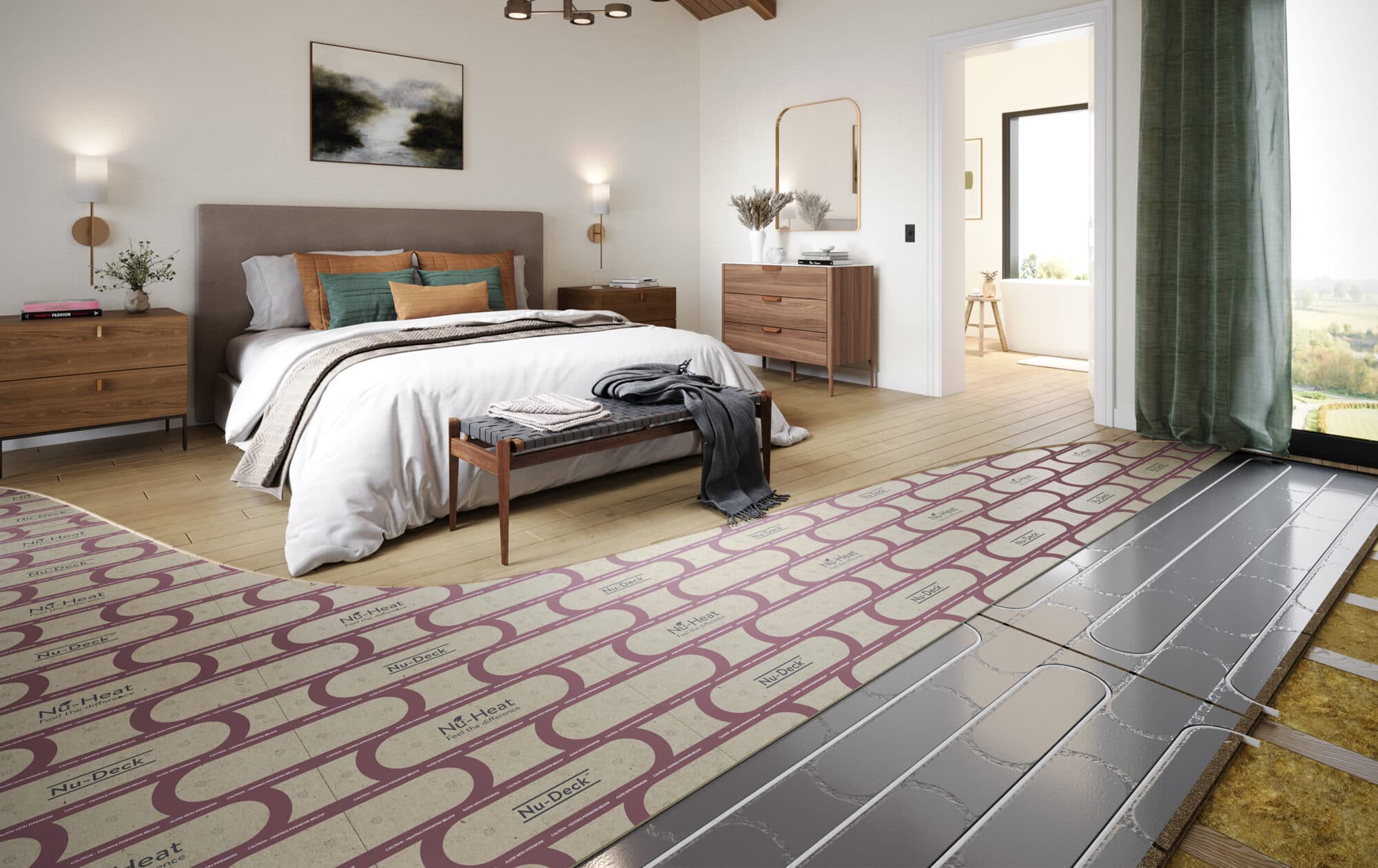
Everything you need to know about underfloor heating
Underfloor heating is the ultimate way to heat a home—efficient, comfortable, and perfect for modern living.
As the UK’s trusted leader in residential underfloor heating, we’ll guide you through every step, from installation, floor coverings, costs and system types.
With over 80,000 installations and 34+ years of expertise, we’ll help you choose the perfect underfloor heating system that’s tailored to your project requirements, whatever the scenario.

Water or electric underfloor heating?
Systems such as Water and electric underfloor heating are installed in different ways, with different pros and cons for each.
Whilst electric UFH is simpler to install and can make sense for small single areas such as bathrooms, water UFH offers superior heating performance and is far more efficient for heating your home in the long run.

Underfloor heating installation
Underfloor heating installation varies by system type, floor construction, and project scope—whether retrofit, new-build, upstairs, or single room.
With over 60 UFH system variations, we provide the UK’s widest range of underfloor heating, specifying systems that deliver optimal heating performance and value for money.
Explore the best underfloor heating solution for your project in our UFH installation guide.
Underfloor heating for new builds
Underfloor heating is cost-effective and simple to install as part of a new build project, fitting neatly into the build schedule.

Retrofitting underfloor heating
Remodelling or updating your home? Retrofit underfloor heating can also be installed as part of a renovation project.

Upstairs underfloor heating
Did you know that underfloor heating is a great solution for all floors of a property, not just downstairs?

Underfloor heating for single rooms & extensions
Enjoy heated floors and free up wall space in a kitchen or bathroom with a OneZone® underfloor heating kit.

We’re here to help you with your project
For expert advice on underfloor heating and renewables, contact us today.
What floor coverings work with underfloor heating?
Our range of underfloor heating options coupled with our tailored approach to system design means you can choose almost any floor covering with Nu-Heat UFH.
We’ll calculate the flow temperature and heat output to deliver maximum performance without damaging your floor covering. Find out more with guide on the best flooring for underfloor heating.

How much does underfloor heating cost?
Underfloor heating installation and system costs vary based on area size, type of UFH, and complexity.
Running costs depend on whether the system is electric or water, and your heat source. Whatever the scenario, we’ll specify the best value and highest efficiency system for your project.
View our UFH costs guide to find out how much a typical underfloor heating system costs to install and run.

Finding the right system for your project
Choosing the right underfloor heating system will depend on your project’s specific needs.
For retrofitting where ceiling heights are limited, low-profile overlay underfloor heating systems are ideal, while screed systems offer excellent heat distribution and can easily be included when building new builds and extensions. For suspended timber floors, joisted floor UFH systems provide a discreet and efficient solution.
Not sure which system is right for your project? Contact our team or use our Underfloor Heating Selector tool below.
Low profile, over-floor systems
Ultra-slim underfloor heating that lays over the room’s existing floor deck, ideal for retrofitting without digging up the floors.

Screed systems
Great for any project where a screed compound is already being poured, these systems are cost-effective and fit neatly into build schedules.

Suspended timber or joisted floor systems
High performance underfloor heating systems specifically designed for suspended timber floors for every scenario.

UFH kits for single rooms
Nu-Heat’s best-selling underfloor heating kits are designed as one-stop solutions for single room/one zone installations. Choose from water screed, water overlay, or electric systems.


Not sure? Use our UFH Selector Tool
Use the Underfloor Heating Selector Tool to find the right system for your project.

Choosing the right underfloor heating company
Whatever your project, finding the right underfloor heating company is crucial to getting it right first time.
At Nu-Heat, our personalised approach to heating design sets us apart. Our detailed room-by-room heat loss calculations guarantee your system’s performance for complete peace of mind.
Beyond heating design, your dedicated account manager and our expert teams work alongside you through every project phase, from initial consultation to fitting and beyond, ensuring a smooth installation process and an underfloor heating system that’s guaranteed to deliver consistent, even heat.

The heating specialists

Bespoke heating design

Award-winning service

Lifetime tech support


Having lived with underfloor heating, I can’t see how anyone wouldn’t want to.
Ann and Wyndham Collins, Nu-Heat customers

Start your Nu-Heat journey
Whether you’re homeowner adding luxurious warmth to your dream home or a tradesperson delivering the very best to your clients, we offer award-winning service and bespoke design to get you the perfect system.
-
1. System specification
Your personal account manager helps you select the perfect system.

-
2. Design & delivery
We create your bespoke design and arrange delivery to suit you.

-
3. Installation & beyond
Enjoy dedicated support from our team for installation and beyond.

Underfloor heating FAQs
How do I control my UFH system?
How you control your UFH depends on the type of system you have. Screed UFH is usually left on with a setback temperature. This helps the concrete slab to act as a thermal store, avoiding long heat up times and keeping running costs low. Retrofit UFH heats up and cools down quickly, so can be controlled more like a radiator system.
Find out more about controlling your underfloor heating system.
How does underfloor heating work?
Underfloor heating works by passing warm water through a series of pipes in the floor. This gently heats the floor and emits heat out into the room.
Unlike radiators which heat the air around the radiator, which then rises to the ceiling creating a convection current, underfloor heating delivers radiant heat across the whole of the floor area, delivering the heat more efficiently to where you need it.
Do I need to dig up my floor to install UFH?
No. If you are renovating, you don’t need to dig up your floors to install UFH!
There are various different systems and installation options, including low profile overlay solutions, like our LoPro® range with a height build-up as low as 15mm. These are simply installed over existing solid or timber floors. Your choice of tiles or laminate can then be laid directly over the system.
Find out more about how to retrofit underfloor heating.
Is underfloor heating better than radiators, can I use both?
UFH can replace radiators completely, or work alongside them, depending on your type of property. New builds are ideal for installing underfloor heating throughout – it’s 25% more energy efficient than radiators. UFH can also be installed on all floors of your renovation property.
Find out more about using underfloor heating with radiators.
Do you still need radiators with underfloor heating?
In a well-designed underfloor heating system, the heat output should satisfy the full heating demand of the property, so there should be no need for radiators or additional heat emitters.
Can underfloor heating be used with heat pumps?
Underfloor heating can be used successfully with heat pumps, due to them both working most efficiently at lower temperatures. We provide air source heat pumps and ground source heat pumps, which can be fully integrated into your underfloor heating system.
Can underfloor heating run off combi boiler?
Yes, our warm water underfloor heating systems can be fed from any boiler system.
Find out more about using a combi boiler with underfloor heating.
How long does underfloor heating take to warm up?
Does underfloor heating warm rooms up faster than radiators? Retrofit underfloor heating that sits on top of the floor warms up very quickly, on par with a radiator system. UFH that is set within a screed can take longer to heat initially, but retains its heat for longer and is easily programmed to provide the right amount of heat exactly when needed.
Which is better: electric or water underfloor heating?
Both warm water and electric underfloor heating have their advantages and disadvantages, depending on the needs of your project.
You can expect warm water underfloor heating to be more cost effective to run, but to have a higher upfront cost, whereas electric underfloor heating is generally cheaper to install, but far more costly to run.
So, for heating a whole house, warm water underfloor heating would be more cost effective in the long run. However, to heat a small single room like a bathroom or kitchen, an electric underfloor heating system may be more suitable.
Find out more about the differences between electric and warm water underfloor heating.
What are the benefits of underfloor heating?
Flexibility
Underfloor heating is extremely flexible. It can be installed in any property type. From new builds to renovations and extensions, there is a solution to suit! You can install UFH in one room or multiple rooms, and you can even have underfloor heating upstairs.
Warm, heated floor
One of the main benefits of underfloor heating systems is how they feel. Heat gently emits upwards from the floor, making cold floors feel warm underfoot. UFH systems produce an even warmth, eliminating cold spots and draughts common with radiators.
25% more efficient
Warm water underfloor heating uses far lower flow temperatures than a radiator system. By covering a larger surface area it is still able to heat the room effectively, using less energy in the process. For this reason, underfloor heating efficiency is around 25% more than radiators and up to 40% more efficient when paired with a heat pump!
Space saving & discreet
Underfloor heating systems are ‘invisible’ as the tube is hidden beneath the floor. This eliminates the need for radiators, freeing up valuable wall space. UFH is ideal for open plan living, smaller homes, and rooms such as kitchens and bathrooms where space is at a premium.
Safe & healthy
Underfloor heating has no exposed hot or sharp edges. This makes it a safe option for young children and the elderly. UFH is also great for allergy sufferers as it provides warmth free from draughts and dust movements that can aggravate certain conditions.
Kind to the environment
As a low temperature heating system, underfloor heating uses less energy than traditional high temperature systems like radiators. This can help you to reduce your carbon footprint – even more so when installed alongside a heat pump.
Can my underfloor heating system leak?
It’s incredibly unlikely that the system will leak.
Our Fastflo® heating tube is strong and durable, manufactured in line with the highest European Industry Standards. This is covered by a 50 year warranty with the first 10 years being insurance backed, covering complete cost of any remedial works and reinstatement in the very rare event of a manufacturing fault.
We also design systems so that the tube only ever connects at the manifold – there are no joins under the floor whatsoever – meaning there are no weak points where leaks can occur.
Is underfloor heating eco-friendly?
Yes, underfloor heating typically runs at far lower flow temperatures than radiators, meaning the boiler can operate more efficiently. Underfloor heating also works particularly well with other eco-friendly, low temperature technologies like heat pumps.
Do I get lifetime support with Nu-Heat?
Yes, we have a dedicated Technical Support Team who are happy to help with any technical queries you may have, what’s more, this support is available for the full lifetime of your system.
How important is an underfloor heating design?
A good underfloor heating design is essential. When you get an underfloor heating design from Nu-Heat you can be sure that all heat losses, characteristics and requirements of your project have been fully analysed, calculated and taken into consideration.
This allows us to create a design for your system that will ensure it works at peak efficiency, keeps running costs down and warms the property effectively all year round.
Want help finding the right underfloor heating solution?
We would love to speak with you to discuss your project. If you have a question about your existing Nu-Heat system, our technical support team are at hand.